
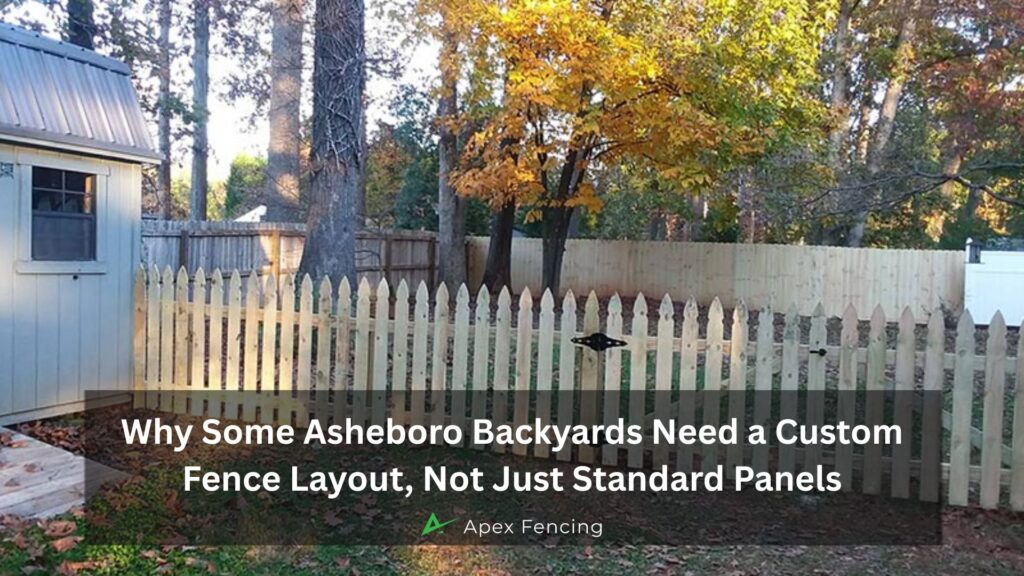
Not every Asheboro backyard is flat, open, and easy to fence. Some yards have slopes, trees, drainage spots, sheds, driveways, pet areas, or older property lines that make a basic straight-panel layout harder to use.
A custom fence layout helps the fence fit the property instead of forcing the property to fit a simple design. That can make the fence look better, work better, and avoid problems like awkward gates, large bottom gaps, wasted space, or poor access.
Key Takeaways
- A custom fence layout helps solve issues caused by slopes, trees, drainage, and uneven ground.
- Gate placement should be planned before the fence is installed, not after.
- Some yards need different fence styles in different areas.
- A better layout can improve privacy, pet safety, mowing access, and daily use.
- The best fence design depends on how the backyard is actually used.
Standard Fence Panels Do Not Work for Every Yard
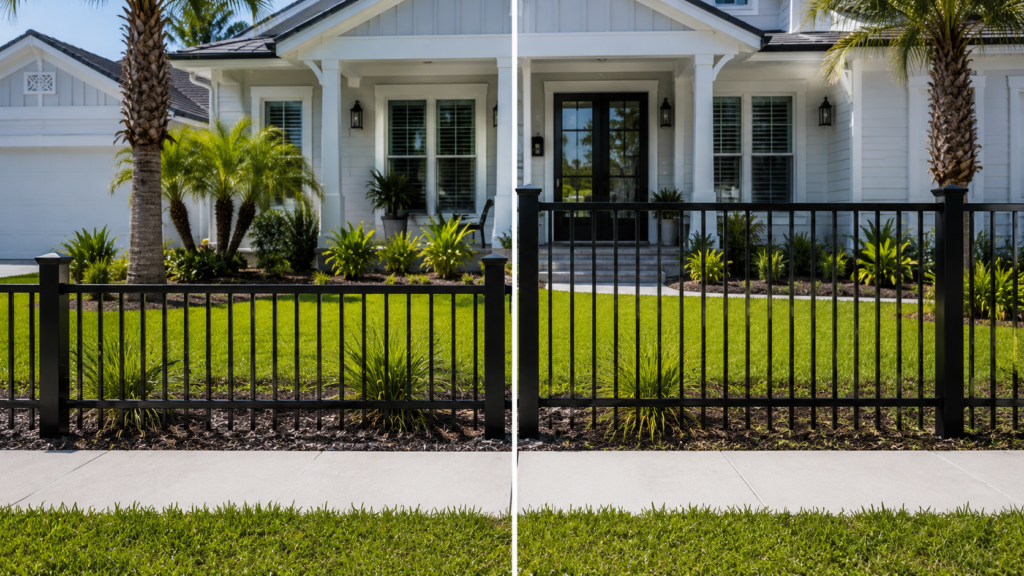
A standard fence layout may look simple on paper. You measure the yard, choose the fence material, and install panels in straight lines. But real backyards are not always that simple.
Many Asheboro homes have yards with slopes, tight side yards, tree roots, patios, sheds, drainage areas, or older landscaping. Some properties also have existing fence lines that do not match how the homeowner wants to use the yard today.
A basic layout can create problems such as:
- Gates in inconvenient spots
- Fence sections that cut off usable yard space
- Large gaps under the fence on sloped ground
- Awkward corners around trees or sheds
- Poor access for lawn equipment
- Privacy where it is not needed and openness where privacy is needed
That is why the layout matters just as much as the fence material. A wood, vinyl, aluminum, or chain link fence can all work well, but only if the design matches the yard.
Sloped Areas Can Create Gaps Under the Fence
Sloped yards are one of the biggest reasons a backyard may need a custom layout. If the fence follows uneven ground without proper planning, it can leave gaps under the bottom rail or make the top of the fence look uneven.
For homeowners with dogs, those gaps can become a real problem. A small dog may slip under the fence. A larger dog may dig at weak points. Even if pets are not a concern, large gaps can make the fence look unfinished.
A good layout should consider:
- Where the yard rises or drops
- Whether the fence should step or follow the slope
- How much bottom clearance is acceptable
- Where gates can open without scraping the ground
- How the fence will look from the home, street, or backyard
This is especially important if the fence is being installed for privacy or pet containment. A privacy fence that leaves large gaps at the bottom may not solve the problem the homeowner wanted fixed.
Gate Placement Should Be Planned Early
A fence gate may seem like a small detail, but it affects how the whole backyard works. Poor gate placement can make a yard frustrating to use every day.
Before approving a fence layout, homeowners should think about how they move through the property. A gate should not just be placed wherever it is easiest to install. It should be placed where it makes sense for daily use.
Common gate planning questions include:
- How will lawn equipment enter the backyard?
- Do trash bins need to move through the side yard?
- Is there a shed, patio, pool, or garden that needs easy access?
- Will pets use one part of the yard more than another?
- Does the gate need to connect to a driveway or walkway?
- Should there be one gate or more than one?
A gate that is too narrow, too far from the driveway, or installed on weak posts can become one of the first parts of the fence to cause problems. Planning the gate early helps avoid dragging, sagging, poor access, and daily frustration.
Trees, Drainage, and Property Lines Can Change the Layout
Some fence layouts need to be adjusted because of what is already in the yard. Trees, roots, low spots, drainage paths, and property lines can all affect where the fence should go.
A fence installed too close to tree roots may be harder to set properly. A fence placed across a drainage area may sit near standing water after storms. A fence built without checking the property line can lead to issues with neighbors or future changes.
Homeowners should look for:
- Areas where water collects after rain
- Tree roots near the planned fence line
- Old fence posts or previous property boundaries
- Utility areas or easements
- Narrow side yards
- Low spots where pets may push under the fence
- Places where future sheds, patios, or pools may be added
The goal is not just to install a fence around the yard. The goal is to install a fence that still works after rain, yard maintenance, landscaping changes, and daily use.
A Custom Layout Can Help With Privacy and Pets
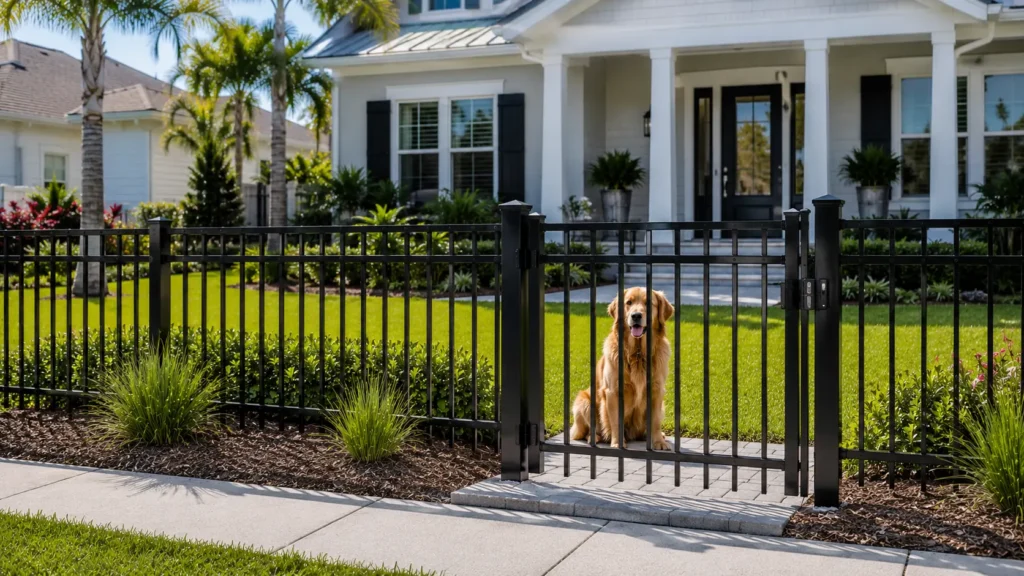
Not every side of a backyard needs the same type of fence. Some homeowners need privacy on one side because of a neighbor’s window, patio, road, or open lot. Other sides may only need a simple boundary for pets or property definition.
That is where a custom layout can be useful.
For example, a homeowner may choose:
- A wood privacy fence along the neighbor-facing side
- A vinyl privacy fence near a patio or pool area
- Aluminum fencing where visibility and curb appeal matter
- Chain link fencing along a wooded edge or larger yard section
- A wider gate near the driveway for mower access
- A smaller walk-through gate near the side yard
This approach can keep the yard useful without making it feel boxed in. It can also help control the project scope by using the right material in the right area instead of forcing one fence style everywhere.
For pet owners, the layout should also consider how animals behave. Dogs may run along one side of the yard, dig near gates, or push against weak areas. A good fence plan should account for height, bottom gaps, latch strength, and gate placement.
A Better Layout Can Make the Backyard Easier to Use
A fence should not make the yard harder to live with. If the layout is rushed, homeowners may later realize the mower cannot fit through the gate, the trash bins are harder to move, or the patio feels closed off.
A strong fence layout should support how the homeowner actually uses the space.
That may include:
- Leaving enough room around patios and decks
- Keeping access to sheds and storage areas
- Making sure gates work with walkways and driveways
- Avoiding tight corners that are hard to mow
- Keeping privacy where it matters most
- Maintaining open views where privacy is not needed
- Planning around future outdoor projects
This is why fence planning should happen before materials are finalized. The best fence material can still feel wrong if the layout creates daily problems.
What to Ask Before Approving a Fence Layout
Before moving forward with a backyard fence installation, homeowners should ask practical questions. These questions can help prevent mistakes before the project starts.
Where should the gates go?
Think about how people, pets, lawn equipment, and trash bins move through the yard. Gate placement should match daily use.
Will the fence block mower access?
A gate that is too narrow can make yard maintenance harder. If a riding mower, push mower, wheelbarrow, or larger equipment needs access, plan for that early.
Are there low spots where water collects?
Drainage can affect posts, bottom gaps, and long-term fence stability. Low spots should be noticed before the fence line is finalized.
Will pets have gaps under the fence?
If the fence is for dogs, check the bottom clearance, gate gaps, and corners. Small gaps can become escape points.
Does the layout follow the correct property line?
Homeowners should know where the property line is before installation. If there is any uncertainty, it may be worth checking records, markers, or a survey.
Will the fence still work if the yard changes later?
If the homeowner may add a shed, patio, pool, garden, or driveway change later, the fence layout should not block future use.
Common Mistakes With Standard Backyard Fence Layouts
A simple layout is not always a bad thing. Some yards really do work well with a standard fence plan. The problem is assuming every yard should be handled that way.
Common layout mistakes include:
- Installing the gate wherever it is easiest instead of where it is most useful
- Using the same fence style on every side of the yard when only one side needs privacy
- Ignoring slopes until gaps appear under the fence
- Building too close to trees or drainage areas
- Forgetting about lawn equipment access
- Blocking areas the homeowner uses often
- Not thinking about pets before choosing the layout
- Treating the fence as a property border only, not part of the yard’s function
A better plan starts with the homeowner’s reason for installing the fence. Privacy, pets, security, curb appeal, and access all lead to different layout choices.
When a Custom Fence Layout Makes the Most Sense
A custom layout may be the better choice if the backyard has:
- Uneven ground or slopes
- Multiple access points
- Dogs or small pets
- A patio, pool, shed, or garden
- Trees near the fence line
- Drainage issues
- A long or irregular property shape
- One side that needs more privacy than the others
- An older fence being replaced
- A driveway or side yard that needs gate access
In these situations, standard panels may still be used, but the design needs more thought. The layout should be planned around the yard, not just the material.
Final Thoughts
A backyard fence should do more than mark the edge of the property. It should help the yard feel more private, more secure, and easier to use.
For many Asheboro homeowners, that means looking beyond a basic straight-panel layout. Slopes, gates, pets, drainage, trees, and access points can all change the best way to install a fence.
Apex Fencing helps homeowners in Asheboro and nearby North Carolina communities plan fence layouts that fit the yard, the access points, and the way the property is used. Whether the project involves wood, vinyl, aluminum, chain link, privacy fencing, or custom gates, the right layout can make the finished fence work better from day one.