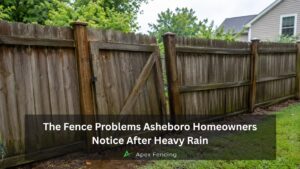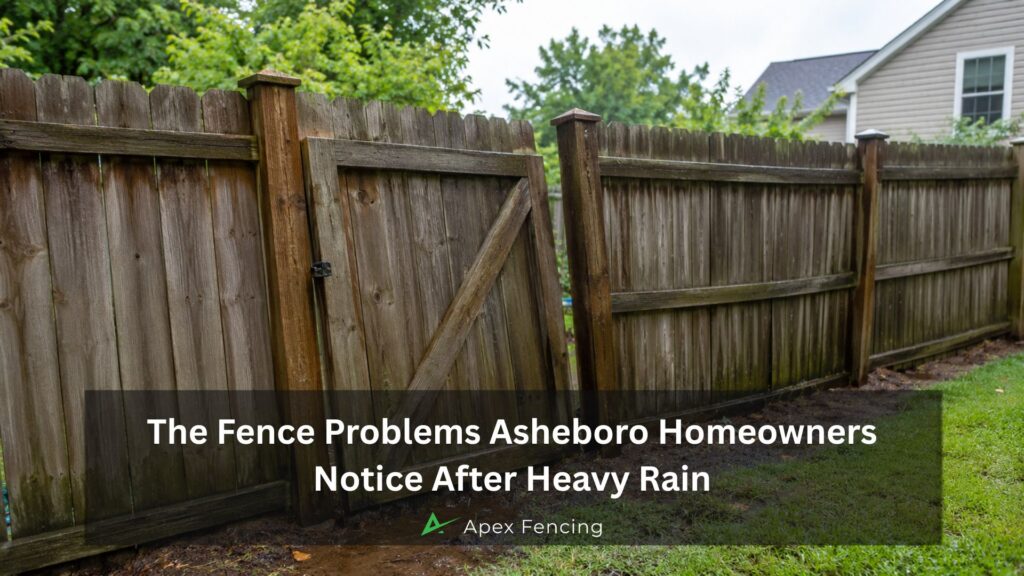
After a heavy rain, small fence problems can become much easier to see. A gate may start dragging, a post may lean, or a wood fence may look more warped than it did before.
For Asheboro homeowners, heavy rain does not always create a brand-new fence problem overnight. In many cases, it reveals weak spots that were already there. Soft ground, poor drainage, aging wood, loose hardware, or unstable posts can all become more obvious once the yard is wet.
Key Takeaways
- Heavy rain can reveal weak posts, drainage issues, loose gates, and older fence damage.
- Dragging gates, leaning sections, and soft soil around posts should not be ignored.
- Wood fences may show swelling, warping, rot, or loose boards after wet weather.
- Chain link, vinyl, and aluminum fences can still have post or gate problems after rain.
- Some fence issues can be repaired, but widespread leaning or rot may mean replacement is the better choice.
Leaning Fence Posts After Heavy Rain
One of the most common problems homeowners notice after rain is a leaning fence post. The fence may have looked fine before the storm, but once the soil becomes soft, weak posts can shift more easily.
A leaning post may happen because of:
- Older wood posts weakening near the ground
- Soil movement around the post base
- Poor drainage along the fence line
- Shallow or unstable post setting
- Pressure from wind, pets, or heavy fence panels
- Previous damage that was not obvious before
A single leaning post may be repairable. But if several posts are leaning, the problem may be more serious. Multiple leaning sections can mean the fence is losing support throughout the line.
This matters because the post is the part that holds the fence upright. Even if the panels still look decent, weak posts can make the whole fence unstable.
Gates That Drag or Stop Latching
Fence gates often show problems faster than the rest of the fence. After rain, a gate may start dragging on the ground, rubbing against the latch side, or refusing to close properly.
This can happen when the gate post shifts, the ground swells, the hinges loosen, or the weight of the gate pulls against a weak post.
Common signs of gate trouble include:
- The latch no longer lines up
- The gate scrapes the ground
- The gate swings open by itself
- The gate is harder to close than usual
- Hinges look loose or pulled out
- The space around the gate looks uneven
A dragging gate is not just annoying. It can affect security, pet safety, and daily access to the yard. If the gate is part of a pet fence, pool fence, driveway entrance, or side-yard access point, it should be checked quickly.
Sometimes the fix is simple hardware adjustment. Other times, the gate post may need repair or replacement.
Wood Boards That Swell, Warp, or Pull Away
Wood fences are especially noticeable after wet weather because wood reacts to moisture. After heavy rain, homeowners may see boards that look swollen, warped, split, or pulled away from the rails.
This does not always mean the entire fence needs to be replaced. But it does mean the fence should be inspected.
Watch for:
- Boards bending or twisting
- Rails pulling loose
- Nails or screws backing out
- Soft spots near the bottom of boards
- Dark staining near the ground
- Boards separating from the frame
- Sections that look uneven after drying
Older wood fences are more likely to show these issues, especially if the fence has not been stained or sealed in a long time. Moisture can wear down exposed wood over time, and repeated wet-dry cycles can make small problems worse.
If the wood is still solid, repair and staining may help protect the fence. If the wood is soft, crumbling, or rotted near the posts, replacement may be the safer option.
Water Pooling Along the Fence Line
Standing water near a fence line is a warning sign. If rainwater collects around posts or stays along the base of the fence, it can create long-term problems.
Pooling water can affect:
- Wood posts
- Bottom rails
- Fence boards
- Soil stability
- Gate openings
- Low areas where pets may dig or push under
This is why drainage should be part of fence planning. A fence installed across a low area may have more problems than one placed with water flow in mind.
For existing fences, homeowners should pay attention to where water sits after rain. If the same section stays wet longer than the rest of the yard, that area may need repair, drainage attention, or a different fence approach when replacement time comes.
Chain Link, Vinyl, and Aluminum Can Still Have Post Problems
Some homeowners assume rain problems only affect wood fences. Wood does show moisture damage more clearly, but every fence type depends on strong posts.
Chain link, vinyl, and aluminum fences can still shift, lean, or have gate issues if the posts are loose or the ground around them becomes unstable.
For example:
- A chain link fence may sag if posts move.
- A vinyl fence panel may look uneven if the post line shifts.
- An aluminum fence gate may stop latching if the gate post leans.
- Any fence can develop gaps if the ground washes out near the bottom.
The material matters, but the structure matters more. A low-maintenance fence can still fail if the posts, gates, or layout were not built to handle the yard conditions.
Soil Movement Can Expose Weak Fence Installation
After heavy rain, soil around the fence can soften, wash away, or settle. This can expose problems that were not easy to see before.
Homeowners may notice:
- Gaps forming under the fence
- Soil pulling away from post bases
- Sections that feel loose when pushed
- Posts that wiggle by hand
- Fence lines that no longer look straight
- Low spots getting worse after each storm
This is especially important for yards with slopes, drainage paths, or areas where water flows toward the fence. If the ground around the fence keeps moving, repairing only the visible panel may not solve the deeper issue.
The fence line may need better planning, stronger post support, or a replacement layout that avoids the worst drainage area.
Repair or Replace: How to Tell the Difference
Not every fence problem after rain means you need a full replacement. Some issues are small and can be repaired. Others are signs that the fence is reaching the end of its useful life.
Repair May Make Sense If:
- One gate is dragging
- One or two posts are loose
- A few boards are damaged
- One section shifted slightly
- Hardware is loose or rusty
- The fence is still mostly straight
- The wood is still firm, not soft or rotted
In these cases, targeted fence repair may be enough to restore function and prevent the issue from spreading.
Replacement May Make Sense If:
- Many posts are leaning
- Several sections are unstable
- Wood is soft, rotted, or breaking near the ground
- The fence has repeated repair problems
- Gates keep sagging even after adjustment
- Large sections are warped or pulling apart
- The fence no longer provides privacy, safety, or pet containment
Replacement may cost more upfront, but it can make more sense if the fence is failing in several places. Repairing one weak area at a time can become frustrating if the whole structure is aging.
Fence Problems Homeowners Should Not Ignore
Some fence issues may seem small at first, but they can get worse after more rain, wind, or daily use.
Do not ignore:
- A gate that no longer latches
- A fence post that moves when pushed
- A section leaning toward a neighbor’s yard
- Wood that feels soft near the ground
- Water standing around posts
- Gaps where pets can escape
- Rails pulling away from posts
- A fence line that keeps shifting after storms
These problems can affect more than appearance. They can affect safety, security, privacy, pet containment, and property use.
What to Check After Heavy Rain
After the yard dries enough to walk safely, homeowners can do a simple fence check.
Look at:
- Post bases
Are they firm, leaning, or surrounded by soft soil? - Gates
Do they open, close, and latch correctly? - Bottom gaps
Did rain expose gaps under the fence? - Wood boards
Are they warped, loose, cracked, or soft? - Fence line
Does the fence still look straight? - Drainage areas
Is water sitting along one section longer than the rest? - Hardware
Are hinges, latches, brackets, or screws loose?
This kind of quick check can help homeowners catch problems early before they turn into larger repairs.
Why Rain Reveals Fence Problems
Rain is not always the direct cause of fence damage. Often, it simply makes hidden problems easier to notice.
A fence may already have:
- Weak posts
- Older wood
- Poor drainage nearby
- Loose hardware
- Soil movement
- Shallow support
- Long-term wear from sun and moisture
After heavy rain, those weak points become more visible. That is why a fence that looked fine last week may suddenly look uneven after a storm.
This is also why regular maintenance matters. Repairing loose boards, fixing gate issues, staining wood, and checking posts can help reduce bigger problems later.
When to Call a Fence Contractor
A homeowner can spot many fence problems from the yard, but it is not always easy to know whether repair or replacement makes more sense.
It may be time to call a fence contractor if:
- The fence is leaning in more than one area
- The gate will not close or latch
- Posts feel loose
- Wood is soft or rotted
- The same section keeps failing
- Water collects along the fence line
- The fence no longer keeps pets secure
- You are unsure if repair is worth it
A professional inspection can help determine whether the issue is isolated or part of a larger structural problem.
Final Thoughts
Heavy rain can reveal problems that were already developing in a fence. Leaning posts, dragging gates, warped boards, standing water, and loose sections are all signs homeowners should take seriously.
Some issues can be repaired with a focused fix. Others may point to deeper problems with the posts, wood, drainage, or overall fence structure.
Apex Fencing helps homeowners in Asheboro and nearby North Carolina communities inspect fence problems, repair damaged sections, fix gates, and decide whether replacement makes more sense for the property. If your fence looks different after heavy rain, it may be time to have it checked before the problem gets worse.