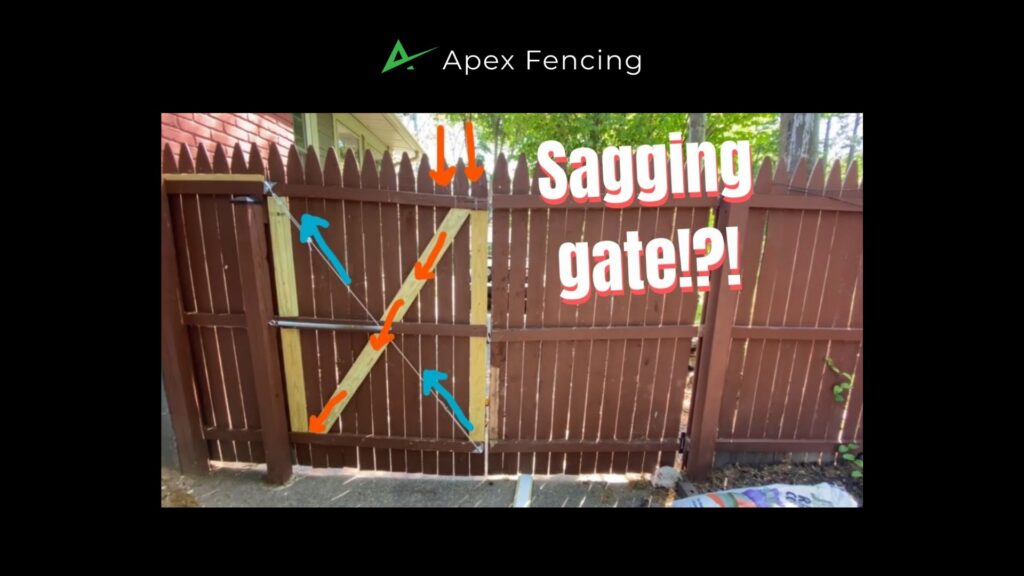
A sagging fence gate is one of the most common fence problems homeowners notice. At first, it may only drag a little or need an extra push to close. Over time, the gate may stop latching, scrape the ground, pull away from the post, or leave a wide gap that makes the fence less secure.
The gate is not always the only problem. A sagging gate can be caused by weak posts, loose hinges, poor bracing, soil movement, heavy materials, or years of daily use. The right fix depends on what is actually failing.
Key Takeaways
A sagging fence gate usually means something has shifted, loosened, or weakened.
Sometimes the fix is simple, like tightening hardware or replacing hinges.
If the hinge-side post is leaning or rotting, the gate may need more than a quick adjustment.
Heavy gates need proper bracing, strong posts, and the right hardware to stay aligned.
If the gate has been repaired several times and still keeps dragging, replacement may be the better long-term option.
Common Signs of a Sagging Fence Gate
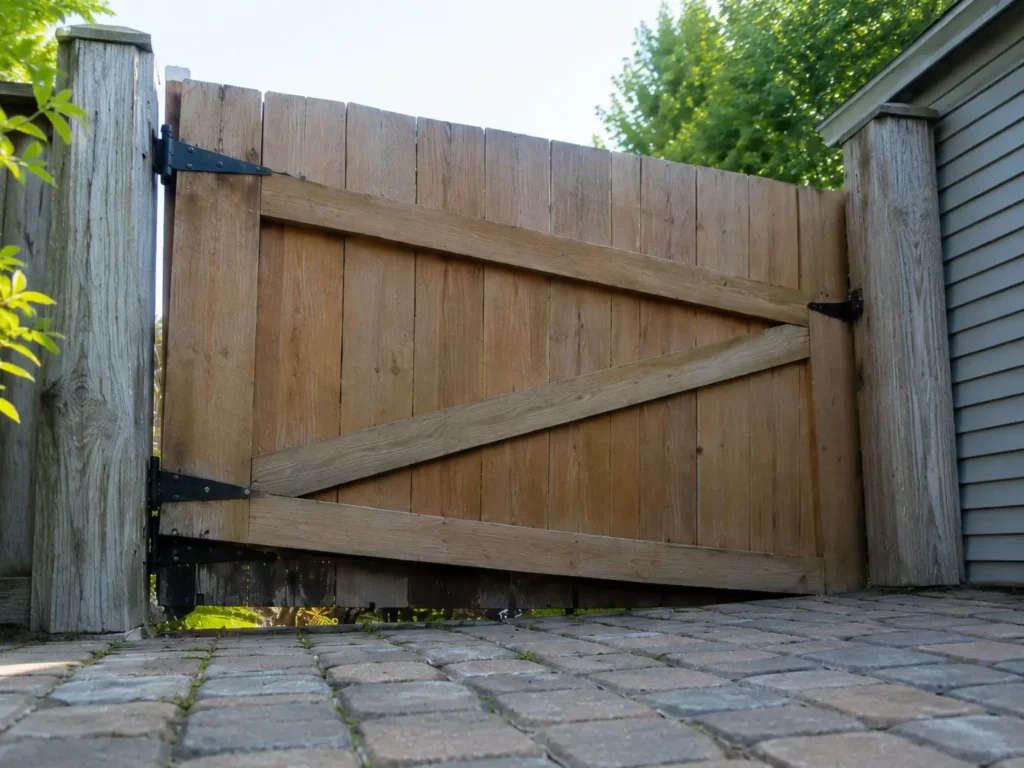
Most gate problems start small. Homeowners often notice the gate feels harder to use before they realize it is actually sagging.
Common signs include:
- The gate drags across the ground
- The latch no longer lines up
- You have to lift the gate to close it
- The gate swings open or closed by itself
- The gap around the gate looks uneven
- Hinges are pulling away from the post
- Screws or bolts keep coming loose
- The gate frame looks twisted
- The gate rubs against the fence post
- The post beside the gate is leaning
These signs should not be ignored. A sagging gate can put extra stress on the fence posts, hinges, latch, and nearby fence sections. What starts as a small adjustment can become a larger repair if the gate keeps pulling on the structure around it.
Why Fence Gates Sag
Fence gates sag because they carry weight and move every time they are opened or closed. Unlike a regular fence panel, a gate has to swing, stay square, line up with the latch, and remain supported by one side.
Here are the most common reasons gates start to sag.
Weak or Leaning Gate Posts
The hinge-side post is the most important part of a fence gate. It carries the weight of the gate every day. If that post starts to move, the gate usually starts to sag.
A gate post may become weak because of:
- Soft or wet soil
- Poor drainage around the post
- Shallow post installation
- Rot near ground level
- Loose concrete footing
- Heavy gate weight
- Years of use
- Storm damage or impact
If the post moves, the gate moves with it. This is why tightening the latch or replacing hinges may not solve the problem. The gate may look like the issue, but the real problem may be the post holding it.
How to tell if the post is the problem
Stand back and look at the gate from a few feet away. If the hinge-side post is leaning away from the opening, the gate will likely drop toward the latch side. You can also gently push the post. If it moves at the base, the post may need to be reset or replaced.
Loose or Worn Hinges
Hinges take a lot of stress. They hold the gate in place, support the weight, and allow it to swing. Over time, screws can loosen, bolts can shift, and hinge plates can pull away from the post.
Loose hinges may cause:
- A gate that drops on one side
- A latch that misses the strike plate
- A gate that feels wobbly
- A gate that has to be lifted to close
- A widening gap near the top or bottom
Sometimes hinge repair is simple. The hardware may only need tightening or replacement. But if the wood around the hinge is soft, split, or rotted, new screws may not hold for long.
For heavier gates, standard light-duty hinges may not be enough. A larger wood gate, driveway gate, or wide privacy gate needs hardware that can handle the weight.
The Gate Is Too Heavy for Its Support
A fence gate needs to be built for its size and material. A small walk gate is easier to support than a wide wood privacy gate or large driveway gate.
Heavy gates are more likely to sag when they do not have:
- Strong hinge-side posts
- Proper diagonal bracing
- Heavy-duty hinges
- Correct gate width
- A square frame
- Enough ground clearance
- Proper latch placement
Wood gates are especially prone to sagging when they are wide, tall, or built without enough bracing. Vinyl and metal gates can also sag if the post or hinge system is not strong enough for the opening.
A gate can look fine when it is first installed but still begin to fail if the frame is too heavy for the support system.
Poor Gate Bracing
A gate frame needs bracing to stay square. Without proper bracing, the weight of the gate pulls the latch side downward over time.
This is common with wood gates. If the diagonal brace is missing, installed incorrectly, or too weak, the gate may twist or sag.
A good gate should not rely only on the boards or panels to hold its shape. The frame needs enough structure to resist movement.
Signs of poor bracing
You may notice:
- The gate frame looks out of square
- The latch side drops lower than the hinge side
- The top and bottom gaps are uneven
- The gate feels loose when opened
- Boards or rails are separating
- The gate drags even though the post looks straight
In some cases, adding or correcting bracing can help. In other cases, the gate may need to be rebuilt.
Soil Movement Around the Gate Posts
North Carolina yards can deal with heavy rain, wet soil, dry spells, roots, and uneven ground. Over time, the soil around a gate post can shift. Since gates put extra pressure on posts, even small movement can affect alignment.
Soil movement can cause:
- Posts to lean
- Gates to drop
- Latches to shift
- Ground clearance to change
- Fence sections near the gate to pull out of line
This is especially common in low spots, shaded areas, slopes, and places where water collects near the fence line.
If the gate works fine in dry weather but starts dragging after heavy rain, the issue may be connected to soil movement or drainage.
Repeated Daily Use
A fence gate is one of the most used parts of the fence. Homeowners open and close gates for pets, kids, lawn equipment, trash bins, pool access, backyard entry, and driveway access.
Over time, regular use can loosen hardware and stress the frame.
Daily use can lead to:
- Loose screws
- Worn hinges
- Latch misalignment
- Post movement
- Frame twisting
- Boards pulling away
- Gate sagging
This does not always mean the gate was installed poorly. Moving parts wear down. But if the gate was not built strongly enough for daily use, problems usually show up sooner.
Can a Sagging Fence Gate Be Repaired?
Yes, many sagging fence gates can be repaired. The best repair depends on what is causing the sag.
A fence contractor may recommend:
- Tightening or replacing hinges
- Replacing the latch
- Adding stronger gate hardware
- Adjusting the gate alignment
- Re-bracing the gate frame
- Resetting the gate post
- Replacing a damaged post
- Rebuilding the gate
- Adjusting ground clearance
- Replacing worn boards or rails
The key is to fix the cause, not just the symptom.
For example, if the gate is sagging because of loose hinges, replacing the hinges may solve the problem. But if the gate is sagging because the post is rotting at the base, new hinges will not fix it for long.
When a Simple Gate Adjustment May Be Enough
A simple adjustment may work if the gate is still in decent condition and the post is solid.
This may be the case when:
- The gate only drags slightly
- The hinges are loose but the post is stable
- The latch is only slightly misaligned
- The frame is still square
- The gate is not rotted, twisted, or broken
- The problem started recently
In these cases, a small repair can often restore normal function.
When the Gate Post Needs Repair or Replacement
If the post is weak, leaning, or rotting, the gate will continue to have problems. The post may need to be reset or replaced before the gate can work correctly.
Post repair or replacement may be needed if:
- The post moves when pushed
- The post is leaning away from the gate opening
- The base of the post is soft or rotted
- Concrete around the post is cracked or loose
- The gate pulls the post out of alignment
- The gate keeps sagging after hardware repairs
This is one of the most important parts of gate repair. A strong gate needs a strong post. Without it, the repair may only be temporary.
When the Gate Should Be Rebuilt
Sometimes the post and hardware are not the only issues. The gate itself may be too damaged or poorly supported to repair cleanly.
A gate may need to be rebuilt if:
- The frame is twisted
- The wood is rotting
- The gate is too heavy for its current design
- The boards or rails are separating
- The gate has been patched several times
- The latch side keeps dropping
- The gate does not match the fence anymore
- The opening needs a better size or layout
Rebuilding the gate gives the contractor a chance to correct the frame, bracing, hardware, and fit. This can be a better option than repeatedly adjusting an older gate that keeps failing.
When Full Gate Replacement Makes More Sense
Gate replacement may be the better choice when the existing gate no longer works for how the property is used.
Replacement may make sense if:
- The gate is too narrow for lawn equipment
- The gate does not close securely for pets
- The gate is too heavy for the posts
- The gate style does not match the fence
- The gate has repeated sagging problems
- The frame is damaged beyond repair
- The homeowner wants a cleaner, stronger entry point
A new gate can also improve daily convenience. For example, a wider gate may make it easier to move a mower, trash bin, trailer, or yard equipment through the fence line.
How to Prevent Fence Gate Problems
A well-built gate should be planned before installation, not treated as an afterthought. The gate is one of the hardest-working parts of the fence, so it needs the right support from the beginning.
Use the Right Post Size and Depth
Gate posts often need more support than regular fence posts. A gate pulls on the post every time it opens and closes. If the post is too small or not set properly, sagging can happen sooner.
Choose Hardware That Matches the Gate
Small hinges may work for a light walk gate, but heavier gates need stronger hardware. The hinge, latch, and fasteners should match the weight and size of the gate.
Keep the Gate Width Practical
Wider gates are useful, but they are also heavier and harder to support. If a wide opening is needed, the gate may need stronger bracing or a double-gate design.
Make Sure the Gate Is Properly Braced
A gate should stay square under its own weight. Proper bracing helps prevent the latch side from dropping.
Watch Drainage Around Gate Posts
If water collects around the gate posts, the soil can soften and the posts can shift. Keeping water away from the post area can help reduce future movement.
Fix Small Problems Early
A loose hinge or slightly dragging gate is easier to fix than a gate that has been pulling on the post for months. Early repair can prevent more expensive damage.
Gate Problems by Fence Type
Different fence materials can create different gate issues.
Wood Fence Gates
Wood gates can sag because of weight, moisture, weak bracing, or aging boards. They may need hinge replacement, post repair, frame bracing, or full rebuilding.
Vinyl Fence Gates
Vinyl gates can shift if the posts move or if the hardware loosens. Matching parts and proper alignment matter when repairing vinyl gates.
Aluminum Fence Gates
Aluminum gates are often lighter than wood, but they still need proper post support and hinge alignment. Bent sections, impact damage, or post movement can affect how the gate closes.
Chain Link Fence Gates
Chain link gates often sag because of bent frames, loose hinges, leaning posts, or worn latch hardware. In many cases, chain link gate repair is practical if the surrounding framework is still solid.
Why Gate Repair Should Not Be Delayed
A sagging gate may seem like a small problem, but it can create bigger issues.
Delaying gate repair can lead to:
- More stress on the hinge post
- Bigger gaps in the fence line
- Damaged hinges and latches
- Scraping along the ground
- Broken boards or rails
- Poor pet containment
- Reduced security
- A gate that becomes harder to repair
If the gate is part of a privacy fence, pool fence, pet area, or business property, keeping it secure matters even more.
Repair or Replace? A Simple Rule
Here is a simple way to think about it:
Repair the gate if the post is solid, the frame is square, and the problem is mostly hardware or minor alignment.
Replace or rebuild the gate if the post is weak, the frame is twisted, or the gate keeps failing after repairs.
The cheapest fix is not always the best fix. A quick adjustment may help for a short time, but if the support system is failing, the problem will likely come back.
Final Thoughts
A sagging fence gate is more than a small annoyance. It can be a sign that the post, hinges, frame, or surrounding fence line needs attention. The sooner the problem is checked, the easier it is to decide whether the gate needs a simple adjustment, a stronger repair, or a full replacement.
For homeowners in Asheboro and nearby North Carolina communities, Apex Fencing can inspect the gate, find the real cause of the sagging, and recommend a fence repair or replacement option that makes sense for the fence, the property, and daily use.
A gate should open, close, and latch without a fight. If it does not, it is worth fixing before the problem spreads to the rest of the fence.